By Simi Situ
“Have you guys heard of River?” On the first day of July, a Wednesday night, Sophie invited a few friends over for nacho night. As we gathered around her dining table, spending time offline discussing many online things —Twitter discourse, our summertime Discord channel (also created by Sophie), and new movies — Sophie set the stage for the shiny new app that would occupy the rest of our night.
The six of us, me (simi), Sophie (formerly sophiee, now 800cherries), Luca (lucaa), Dani (perfectlynormalgirl), Claudia (claudia), and Zander (zander), each downloaded River and scrolled around, commentating and asking questions about the app. Is it like Instagram? Who are these people? What’s a channel? Who just connected my picture? @networkp submitted to my channel?!
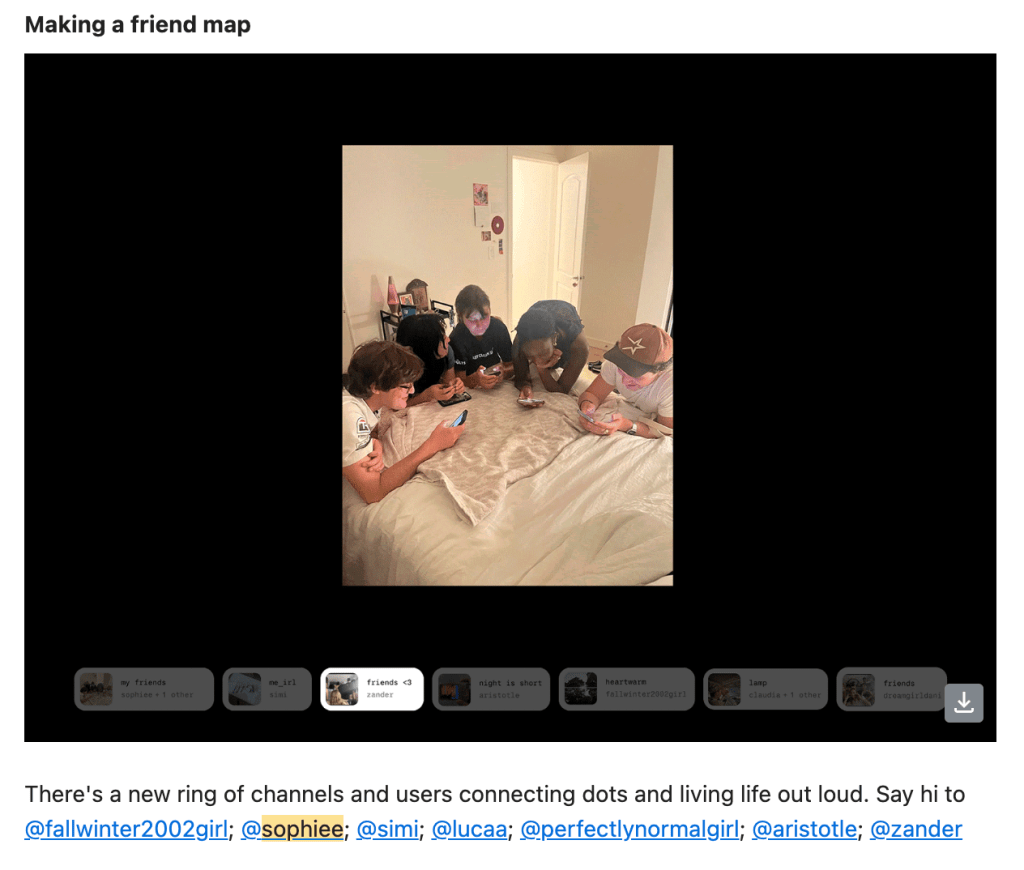
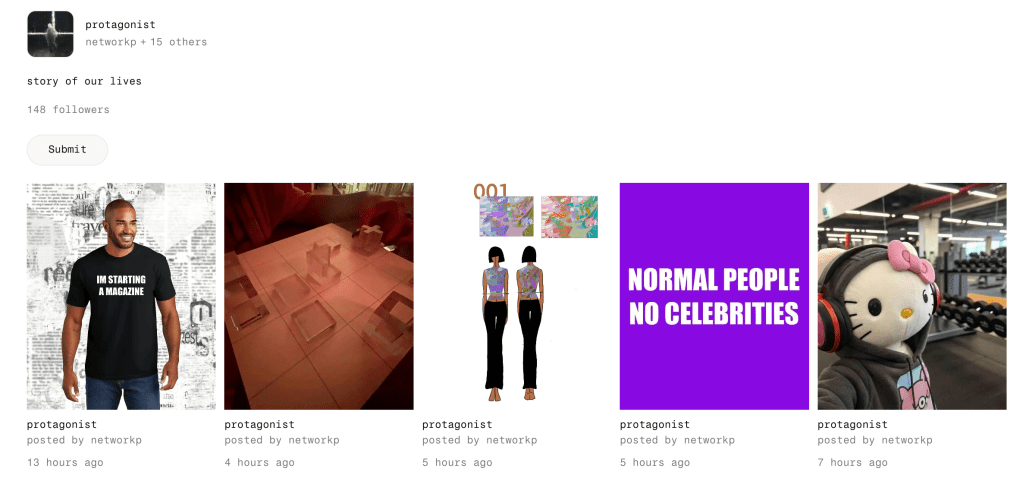
River, to me, is a mix of all of the big social media platforms of the past decade. Its interface is streamlined and minimal, and the app gives users the ability to upload anything their hearts desire. Text like Twitter, pictures like Instagram, mp3s like SoundCloud, or, through a recent update, longform blogs like Substack or LiveJournal. Posts are all public and organized by user-created channels which they can curate themselves and accept submissions to, to form “connections.” While River’s calling card is “a diary for everything,” which sounds individual, connection is really the basis of the platform.
“That’s very beautiful that it’s the exact second-half of the year,” Zander recalls when trying to remember the first night. He jokes, “It was like man discovering fire. It was like you’re at a skate park and someone just hit a 900, and everyone’s like holy shit how did you do that?”
A quintessential Gen Z experience is huddling around one another, all on your phones doing the same thing. The night we discovered River, glued to our screens wandering around our common gathering space in Mid-City (and what we would soon dub River House), we reminisced on similar flashpoints in our lives, discovering apps like House Party, a group call app from the mid 2010s, or BeReal, a photo-sharing app that dominated college campuses in 2022 then faded into obscurity. We wondered if we’d even be using River in a few days? A few weeks? As summer draws to a close, there are a number of qualities the group has noticed that have made River take on a sticky quality. Unlike other initially enthralling apps, there’s something about River, its community, how it has traveled from coast to coast and then around LA, that keeps its users coming back.
Marina (fallwintergirl2002) was absent from nacho night but went on to be our group’s most active River user, now spending multiple hours a day on the app: “[The next day] I got a text and a screen recording from Sophie saying, ‘download River.’” “I’m on it probably everyday. It’s taken up my life. My Instagram screen time is still high, but now River is like higher than all of it.”
“When I’m on Instagram for three hours, I leave [it] with the feeling I wasted three hours. I feel anxious; I feel physically nauseous. I have eye strain. [With River] I leave the app with reading recommendations, with super good music recommendations. I’m not opening my phone lackadaisically and opening River by muscle memory. I see something out in the real world and I’ll think, oh, I want to put this on River.”
Very soon after we started using River, Sophie received a message from a user with the handle @hardliver, asking how we’d found the app. A few weeks later, a group of 10 of us LA users hopped on a call to meet Anita (hardliver) and Roman (roman) who both work on the brand side at River. Aristotle (aristotle) joined us and recapped the story of his time spent in New York where his friend Corinna had been visiting the River office where she had met Roman. The most salient memory I have of this massive call was Sophie excitedly proclaiming, “I want to meet the love of my life on River!” The statement feels more inevitable for any one of us now than it does fantastical.
After this Zoom, our group went from River users to River fans. We’d bring the app along to document birthday parties, the Fourth of July, baseball games, walks around the neighborhood, day trips, and more. The connective culture of River makes meeting and sharing easy and rewarding. The app feels intimate, not just because of its small number of users, but because the app encourages and necessitates constant, generative interaction within its community. No pretense.
Marina speaks to the kind of expression River affords her: “I have an issue with nostalgia where I can’t look back on even two months ago. Now my camera roll is alive, full of possibility and inspiration and connections, like a library of work rather than a timeline of stuff that has happened.”
Zander agrees, remembering a later one-on-one chat with Anita where she asked him if River felt “new”?: “[I responded] ‘it feels like what I thought social media was.’ And we were [only] just old enough to have a sliver of pre-algorithm social media.”
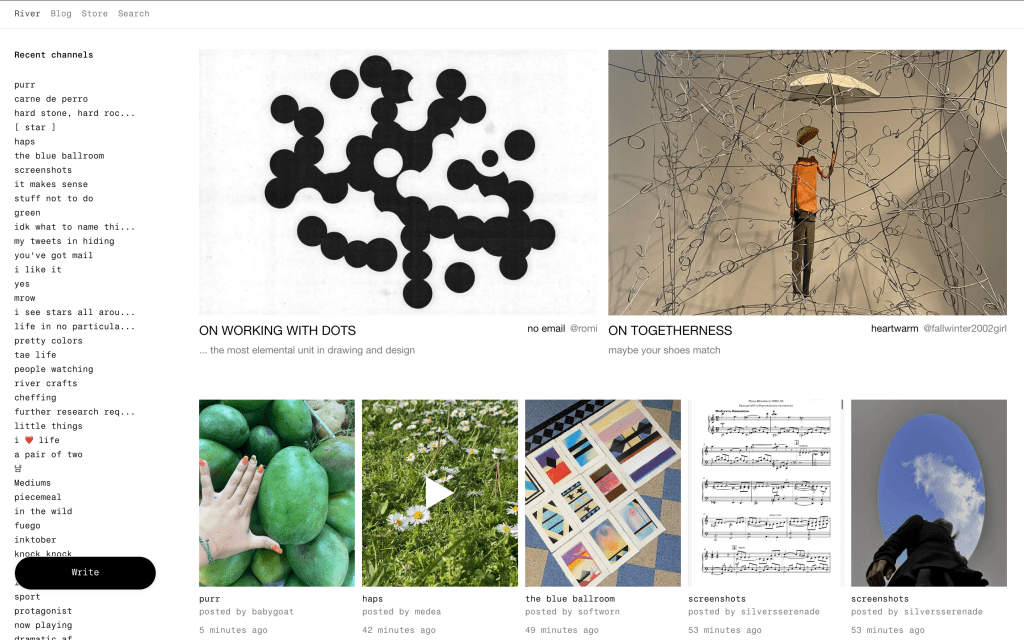
Sitting down with Anita and Roman to ask about how they’ve experienced River’s expansion of the past few months, it became clear that River’s refreshing and sticky qualities were no accident.
“I always say ‘never did I dream of working on an app when I was a little girl,’ but [River] is only really just the vessel of how this idea is being shared right now,” the idea that Anita is referring to is connectedness, or being a “lifestar,” another touchpoint of the River brand.
Roman adds “A lot of social media platforms profiles are set up for one-way communication, like a profile speaks to an audience, like somebody on a stage is performing to an audience. We [at River] promote these ideas of lifestyle and doing what you want, but these ideas are all predicated on social and care-oriented foundations. Do what you want, not in an individualistic sense, but in a social sense. Be a lifestar recognizing that everyone is the protagonist in their own movie.”
For my conversation with Anita and Roman, I ripped a question straight from a River user survey they had published a few days before: “Do you consider River social media?” River is undeniably a refreshing experience, so refreshing it’s hard to consider it social media in the way most of us relate to other apps on our phones. Zander cited his multi-hour Instagram binges that keep him from using River as much as he wants to, and I’ve been meditating on how I may have to credit River with helping me kick my TikTok addiction, for now at least.
While both Zander and Marina do consider River a form of social media (Z: Because it’s social and because it’s media. M: Because all my friends live there), Anita and Roman favor the term “social network.”

Anita tells me she was the first person to join the River team in July of 2024 outside of its “core-four founders,” Max (networkp), Salief (salief), Luis (antidwell), and Joey (io) who she met in Montreal years prior. Roman was also friends with the founders prior to joining the team, considering the brand team pair “friend nepo hires” all united by the River vision. The app feels like a collection of friends even if not everyone knows one another, a true network of makers:
“I think of social networks such as the early days of Facebook, a place to go to connect with people.” Recounting her discussions with the founders, Anita speaks to the team’s philosophy: “It’s not that we don’t want to be on social media, we just want a better relationship with it. This whole idea of cleansing or taking a year off, that’s not what we truly want. We want to be seen for who we are and maybe connect with someone else and see who they are.”
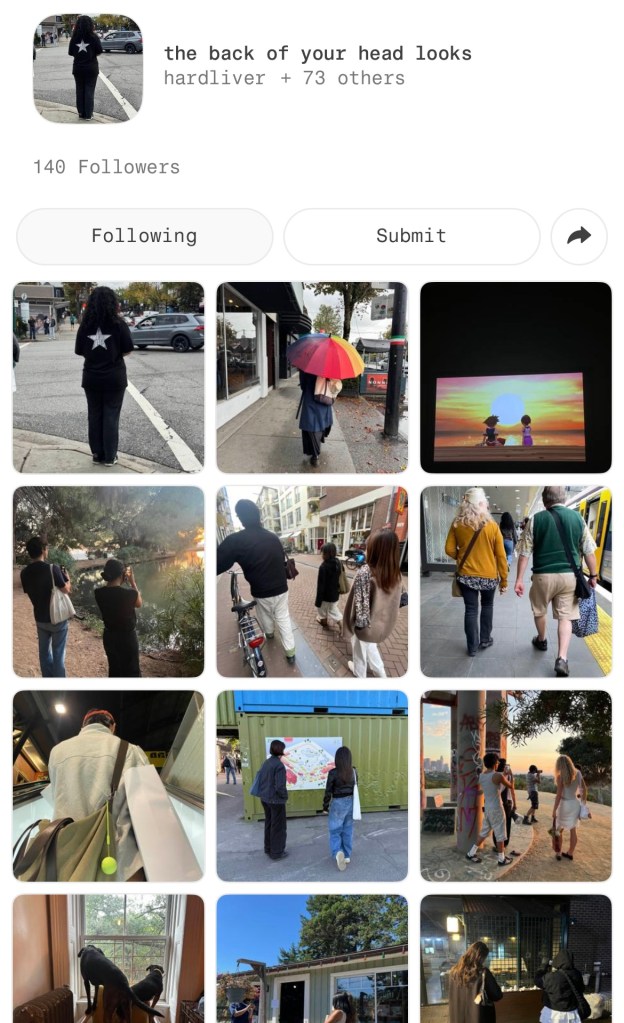
Roman follows that train of thought, “These days most so-called ‘bad’ things in the world or any instance of anger or violence or negative emotion are just a yearning for connection… now we’re talking about that more.” On how River addresses that yearning, Anita and Roman credit the app’s structure, a focus on what the users bring to the table: “The structure of River doesn’t, to me, leave that much residue on what goes through it. It really is people connecting dots and a network being made as opposed to media that [outside forces] are transmitting or delivering,” says Roman.
Of the kinds of people who use River, Roman is quick to remark on how cool everyone is and Anita agrees that everyone is cool because of how normal and multifaceted they are. Just living and sharing. “Normal people are up next! Normal people are about to blow up!” he proclaims.
River has this global and open ethos that makes normalness seem special and viable enough for a social platform to run on. Anita and Roman recount “oh shit” moments for the team like seeing the app pop up in Vancouver and Portland and even Turkey. The in-person elements of River are a large contributor to its tight-knit community. The River studio space in Bushwick hosts regular events (some documented “47 thames” channel), and Anita is dedicated to delivering tangible pieces of River to its users such as custom t-shirts, journals, pouches and more. A mutual friend of the River House, Subin, sent the group a series of Discord messages right after encountering Roman for the first time out and about on the streets of NYC in August, identifying him from his lifestar t-shirt alone.
Coincidences and serendipity continue to follow River users into real life, in early September a number of Los Angeles River users held a successful meetup at the Silver Lake Meadow. Marina and Zander describe the event as “normal” like any other hangout: “It felt like I was hanging out with friends and, in a weird way, it was like River was the friend that introduced us,” Marina shares.
The future of River seems infinite, Anita and Roman recognizing its potential and having lofty dreams that only feel like a matter of time before they come true. “The app is still in formation and is still in a place of figuring out the best version of itself. The dream is a version of the app that everybody loves and wants to use,” says Roman. The two throw around concepts from their “growing backlog” of good ideas that they’re hoping to execute: River workshops, River residencies, River raves, River dinner parties, River book clubs with hundreds of people showing up.
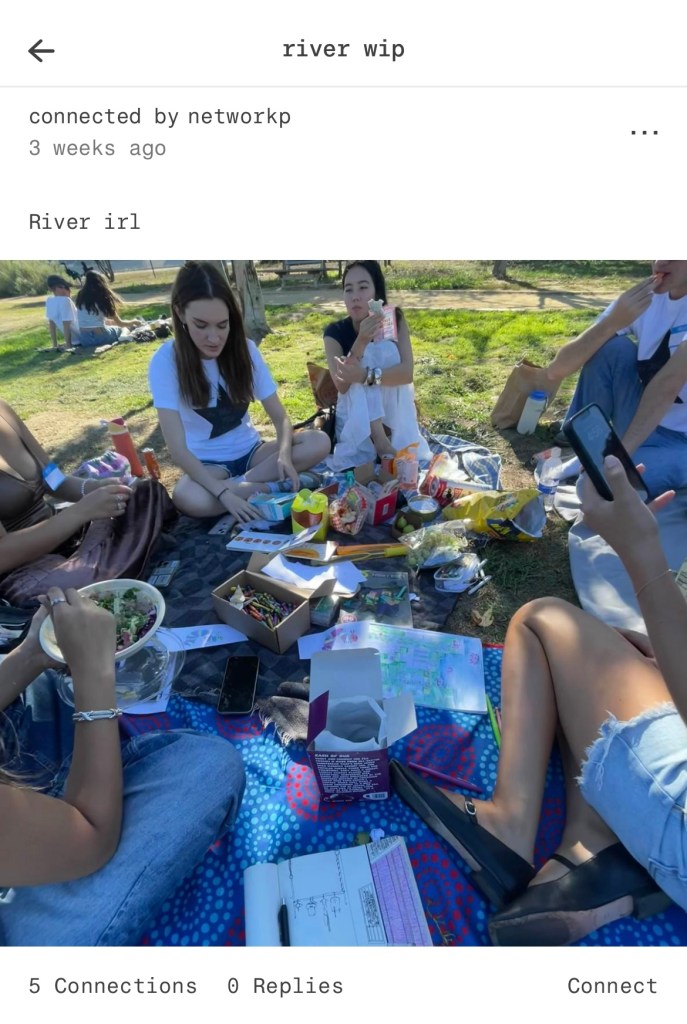
Anita is based in Vancouver but shares an idea of an image attached to New York. “It’d be so sick to see someone on the subway with their phone and they’re posting or scrolling through their River feed.” Roman and a member of the core-four, Salief, have both relocated to Los Angeles, dubbing themselves the “PST/West Coast counterparts” to the rest of the team. When I ask which city they prefer, Anita makes the case for both while Roman avoids taking a stand to avoid potential personal backlash (he’s an NYC native). When I ask Marina and Zander, they come down on the side of New York but can’t deny the magic of Los Angeles. “It’s my first love! I love it for the way it has fucked me up and over… it’s my sweet little idiot.”
My take? I like that New York is for everyone, but I like that LA can feel like it’s mine. On a random afternoon, driving down a quiet street in the city center feels like a surprise kind of sanctuary. New York imposes itself for good reason, makes you participate, even at moments where you don’t want to but know you have to.
River, to me, represents that love affair between the two cities: A diary for you to document everything that is also a public and connected record. Expressing the self through the other. Protagonist and ensemble. Mythology and romanticism paired with realism and presence.
As we end our Google Meet (the platform of choice if you’re ever chatting with the illustrious @hardliver) Anita pokes fun at Roman:
“He didn’t answer the question, but he moved from New York to LA, so let’s take from that what we’ll take from that…”


 Slag Magazine
Leave a comment