Two Slag Contributors, Dietz Woehle and Arabella McClure, attended the Telluride Film Festival over Labor Day weekend These were the standouts.
Hamnet
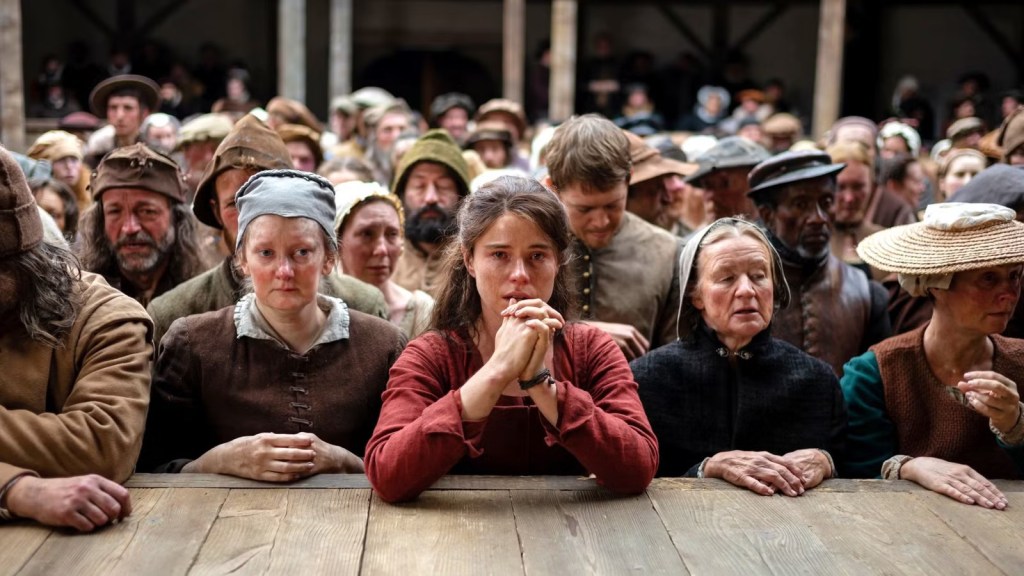
Directed by Chloe Zhao
Starring Jessie Buckley and Paul Mescal
Chloé Zhao has found herself in a unique position. After storming the Oscars with her 2020 film Nomadland, it seemed that Zhao had become one of the most important filmmakers of her time, becoming the first woman of color to win Best Director. However, her follow-up film, Eternals, seemed to kick off a series of Marvel misfires that put the world’s biggest franchise in question. With all that baggage, her newest film, Hamnet, arrives this fall with much to prove, and it overdelivers in all respects. This is by far one of the finest films you can see all year.
Based on the Maggie O’Farrell novel of the same name, Hamnet follows a fictional version of William Shakespeare (Paul Mescal) and his wife Agnes (Jessie Buckley), as they fall in love and experience a great tragedy that inspires the creation of Hamlet. Blending her Malick-esque transcendental filmmaking with a more traditional biopic style, Zhao takes O’Farrell’s book and elevates it to a truly mesmerizing cinematic experience. Hamnet has very simple ideas at its core, but much like Mescal’s Shakespeare, it has feelings too powerful for words. The great power of art is that it gives us access to the emotions we can’t think our way through. Zhao’s film not only understands this. It’s directly about this struggle.
Hamnet packs an emotional punch, to be sure. The third act in particular will not leave a dry eye in the house, but the film’s most powerful moments are surprisingly subtle. Zhao and her talented ensemble have so much faith in this story, and know exactly what it needs to blossom. Mescal, who at first seems like an odd pick for Shakespeare, crafts a man so sensitive and so believable that he convinces you that this must be how the Bard was. Jacobi Jupe as the titular son also shines, as one of the most outstanding performances from a child actor in years. Jessie Buckley completely steals the show in a performance that will tear your heart out and show it back to you.
With Hamnet, Zhao has crafted the greatest Hollywood comeback since David Lynch with Blue Velvet. She not only proves that she is the visionary she was once hailed as, but that she came out of her Eternals experience a better filmmaker, as her skills and voice have only grown more powerful and universal. This is her finest film yet, one of the year’s best, and one of the best of the decade.
Pillion

Directed by Harry Lighton
Starring Harry Melling and Alexander Skarsgård
It’s no secret that Alexander Skarsgård is a huge freak. He let Mia Goth walk him around on a leash for the premiere of 2023’s Infinity Pool, and pushed the boundaries of the new Cannes dress code this year by wearing a BDSM-themed t-shirt paired with thigh-high boots. Pillion, which Skarsgård starred in and produced, is certainly not afraid to get freaky, but also stands out as a surprisingly wholesome take on dating for the modern gay man.
Skarsgård plays Ray, a chiseled biker who takes on the shy, inexperienced Colin (a scrumptiously adorable Harry Melling) as his pillion. As first-time writer/director Harry Lighton explained in his introduction to the film at the Telluride Film Festival, “pillion” is an actual term for someone who sits in the back seat of a motorcycle. In this film, it takes on a much more depraved meaning. Colin is Ray’s submissive, and finds himself thrown into a new world of kinky bikers who all have pillions of their own. So yeah, there’s a lot of hardcore sex, leather, and chains, but don’t be fooled. This is the feel-good movie of the year.
Maybe not all of us have been in a strict, 24/7 BDSM relationship, but I believe every viewer, whether they’re gay, straight, or the dreaded bisexual nonbinary combo (like me) should be able to see a little of themselves in Colin’s elation at the idea of being wanted. Early in the film, when Ray wraps a tape measure around Colin’s neck to size him for his own personal lock and chain, Colin puts his hand up to his neck and smiles, like he wants to remember the feeling forever. This scene recalled so many moments when I’ve found myself staring at a mark left by a partner, wishing it would last forever so I would never forget their touch. It’s not romanticizing the pain, but rather thinking of how it felt to be so passionately desired.
In stark contrast to the shock value of heterosexual BDSM “fantasies” like Fifty Shades of Grey or 365 Days, where you’re not even sure if the couple even likes each other, Pillion asserts that even the most “out-there” sexual acts can still be rich in intimacy and vulnerability. Colin’s relationship with Ray, while pushing him to his limits, teaches him what he truly loves and values, and forces him to confront the sacrifices he will make to please. Some of them are well worth it, while others might be going a bit too far. It’s the most honest portrayal of a modern gay relationship I’ve seen in years.
If I Had Legs, I’d Kick You
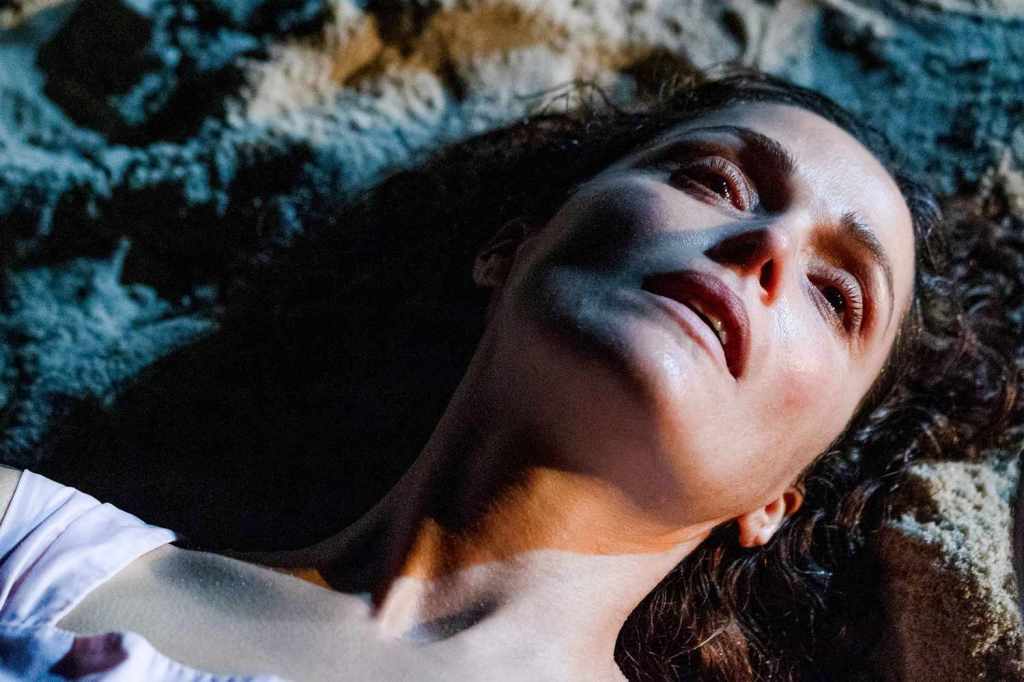
Directed by Mary Bronstein
Starring Rose Byrne
The comfort of knowing something isn’t your fault isn’t very comforting when that means you have no control over the situation. This is the panic at the heart of Mary Bronstein’s newest pitch-black comedy, If I Had Legs I’d Kick You. In a career-best performance, Rose Byrne stars as Linda, a mother of a sickly child who is forced to move out of their home and into a shady motel, after a giant hole bursts in their ceiling. What follows is a series of anxiety-inducing set pieces, including a missing person, an aggressive receptionist (Ivy Wolk), a bewildered neighbor (A$AP Rocky), and the most intense scene with a hamster ever put to celluloid.
Dealing with the guilt, fear, and dread of parenthood, the film offers many comparisons to David Lynch’s Eraserhead. While Linda’s child is not an otherworldly monster, she might as well be, as the camera obfuscates her, almost as if she could not physically be captured by the beautiful 35mm photography. While Bronstein’s film fits the description of the latest anxiety attack from indie distributor A24, it comes across its darkness earnestly, as the emotions feel raw and genuine. Bronstein based elements of the film on her own life and nightmares, but it’s Byrne’s central performance that truly elevates the entire experience. Linda is a complex character, and in lesser hands, she could come off as downright despicable, but Byrne walks the thin line of making her very human for both good and ill. So much of the film is tight close-ups on her face as she masterfully guides us through the worst week of a mother’s life.
Also to be highlighted is Conan O’Brien as Linda’s therapist/coworker, who strikes the perfect balance of his natural funny charm and a strange, sinister energy that matches Byrne. If I Had Legs I’d Kick You is a delightful nightmare of a picture, one that reminds you why we love to squirm at the movies.
Bugonia
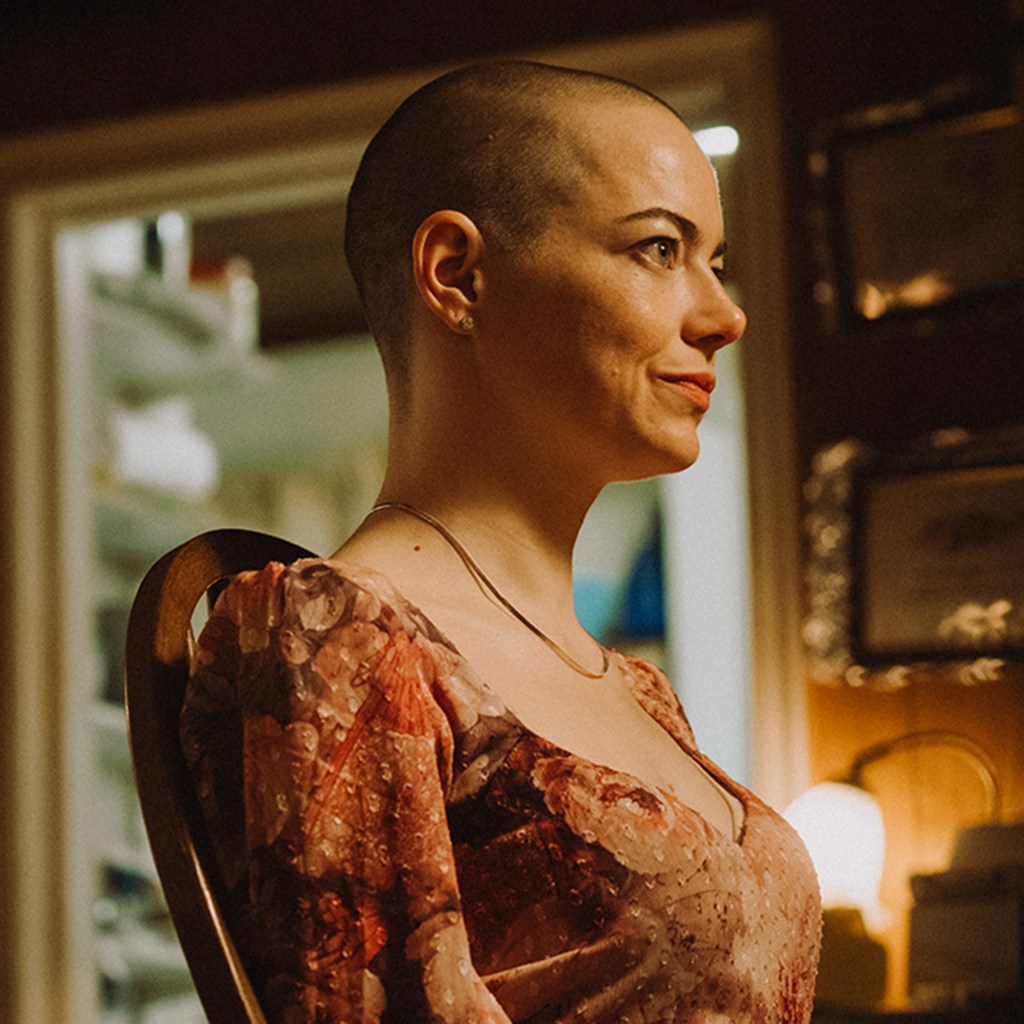
Directed by Yorgos Lanthimos
Starring Jesse Plemons and Emma Stone
Based on the South Korean film Save the Green Planet, Bugonia is the latest from director Yorgos Lanthimos (Poor Things, The Favourite) and writer Will Tracy (The Menu). When an isolated, angry American (Jesse Plemons) becomes convinced that a successful CEO (Emma Stone) is an alien, sent here to enslave and destroy humanity, he enlists his mentally-challenged family member to kidnap her and have her take them to her leader. Walking the line between the Oscar-friendly Poor Things and his darker fare, Lanthimos’ film is full of twists, turns, and major WTF moments that are guaranteed to get huge reactions from Letterboxd users. Sadly, the film never amounts to much beyond the wild ride that it offers. Bugonia is a movie best experienced knowing as little as possible going in, but much like Tracy’s last script, The Menu, the film spends so much time playing with its food that it doesn’t offer the audience much to chew on.
While the occasional complex thread is introduced, it’s always quickly abandoned for the next shocking (predictable) moment. The ending, in particular, will either bring big laughs, bigger gasps, or even bigger eye rolls. Still, Lanthimos is no slouch behind the camera, as the film looks hauntingly beautiful and offers incredible performances from Stone and Plemons, even if he does often feel miscast and too old for the role. Many will claim Bugonia as the best film of the year, and it sure is a fun time at the movies, but for those who want a little more meat on their dark comedy, stick to producer Ari Aster’s directorial effort, Eddington.
Frankenstein
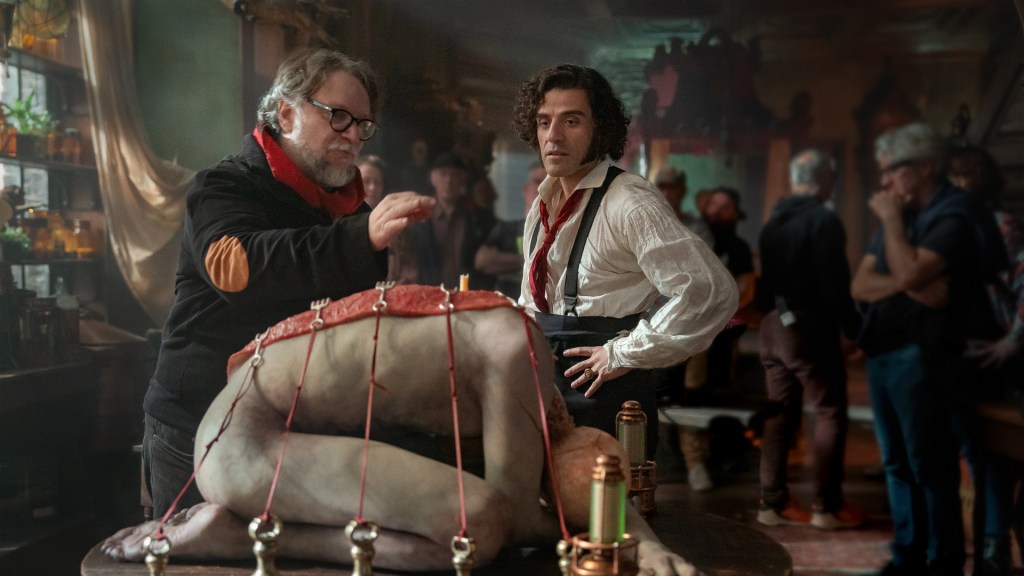
Directed by Guillermo Del Toro
Starring Oscar Isaac, Jacob Elordi, Mia Goth, Christoph Waltz
It’s hard to think of a pairing of source material and filmmaker as obvious (or arguably destined) as Mary Shelly’s Frankenstein and Guillermo del Toro. The classic tale of man playing god has all the staples of a del Toro fairytale: creatures, fathers, man as the true monsters, and plenty of excuses for lavish make-up and production design. All of this culminates in a movie that is certainly not the filmmaker’s best, but undoubtedly his most.
Retelling the classic tale, Oscar Issac leads the film as Dr. Frankenstein, a mad scientist determined to solve death, while Jacob Elordi (under layers of impressive makeup) embodies his creature. Clocking in at a whopping 149 minutes, there is no idea or beat left out of del Toro’s Frankenstein, as it is clear that this movie has been banging around in the director’s head since he was a little boy. With the unlimited resources of a Netflix blockbuster, he is leaving no stone unturned. For both better and worse, Frankenstein is exactly what it says on the tin. For those familiar with the source material, del Toro doesn’t offer any spin on the material except his signature style, and for fans of the filmmaker, there are no themes or ideas he hasn’t explored better elsewhere. However, these gripes feel petty when placed next to the finished product. This pairing is blatantly obvious for a reason, and Frankenstein never disappoints.
It might be the most expensive film ever made, as every scene takes place in a new massive set, with del Toro’s detailed production design. But the two leads also shine through. Issac has been one of our most undersung leading men, and he is clearly having a blast with the over-the-top nature of the production. Elordi fits nicely as one of del Toro’s monsters, who may or may not be more human than the people around him.
Much like Peter Jackson’s take on King Kong in 2005, this Netflix Frankenstein feels like it was made by a child loose in a candy store, and when one of our modern-day great filmmakers is excited, it’s hard not to feel a little excited too, even if the sugar high crashes after a little while. Being neither the best version of this story nor the best film by this filmmaker can’t stop Frankenstein from being a very solid Gothic fairy tale that deserves more credit than it is destined to get. Out of all the Netflix films at Telluride, this is the most in need of the big screen experience. While all films deserve a theatrical run, Frankenstein’s strongest strengths are its technical aspects that will be lost to streaming compression and slow holiday WiFi. Being at home in the presence of the dreaded phone will only highlight the film’s flimsy pacing and lengthy runtime. For those who have a chance to see Frankenstein in a theater, please take it, and Netflix, please give our great filmmakers a fighting chance.
Springsteen: Deliver Me from Nowhere

Directed by Scott Cooper
Starring Jeremy Allen White and Jeremy Strong
Before showing his film, which had already become a massive hit at Telluride, director Scott Cooper made a promise. He stated that Deliver Me from Nowhere was not a typical biopic, and if that’s what you were expecting, you would be disappointed.
Was there any truth to his promise? Sure, the film doesn’t show Bruce Springsteen thinking back on his entire life before he goes on stage. It focuses solely on the writing of the album Nebraska while Bruce was living in his hometown in 1981. But that’s pretty much where the differences stop. I suppose it could be considered impressive how Cooper manages to fit every tired music biopic trope into this one small episode.
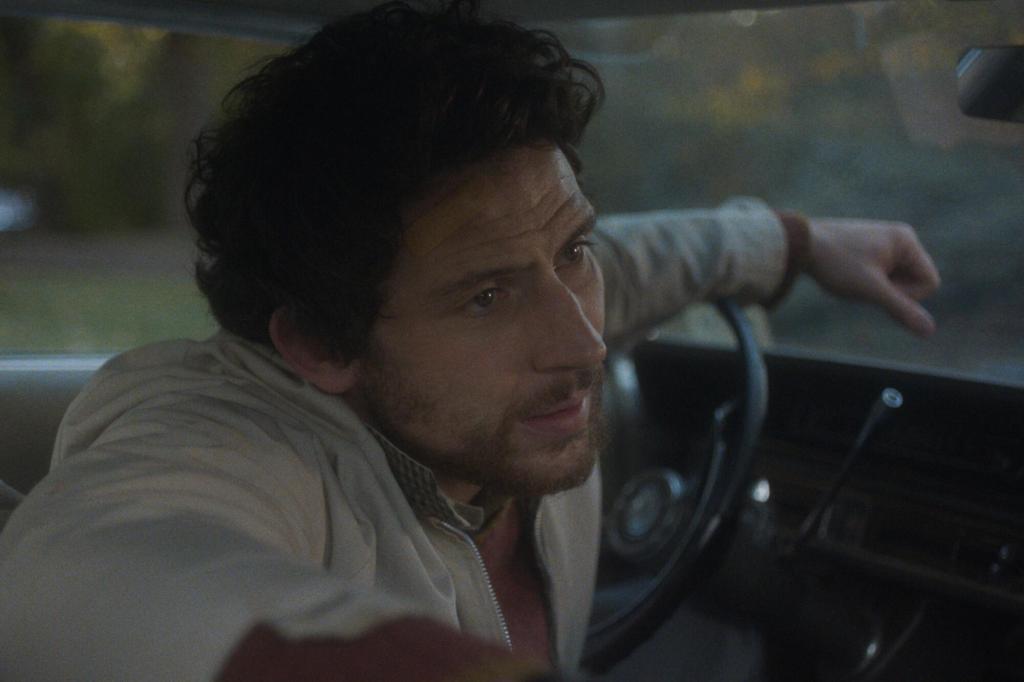
The writing of Nebraska does seem like a good place to center the story. Bruce has just wrapped a tour, settled back in his New Jersey hometown, and is forced to face the demons that haunted him since his childhood, producing a darker and more introspective work of art than ever before. But Cooper seems to think that exploring conflict with mental illness is uncharted territory in a music biopic, which couldn’t be further from the truth, and he never really explains how Bruce’s struggles emerged when writing the album. I found myself laughing during an emotional scene where Bruce drives his car erratically down the highway. Contrived moments like this are so common in biopics that it didn’t feel out of place, but I really found myself wondering what had even led Bruce to that moment. It seemed to (no pun intended) come out of nowhere.
The most egregious use of biopic tropes is seen in Bruce’s relationship with Faye (Odessa Young), a young mother from his hometown. Also with little buildup or explanation, Bruce declares that he is bad for Faye and leaves her. But why? It’s clear he’s dealing with something, but the film never makes it clear what that something is. Maybe the uncertainty stems from cutting the most iconic line from the film’s trailer, where Jeremy Strong as Jon Landau states that Bruce grew up with a hole in the floor of his childhood bedroom. Apparently, Nebraska is his way of filling in the holes in his own foundation. Or maybe that’s not true at all, since this line never appeared in the actual film.
Sure, it was a cheesy line and Twitter had a field day with it, but cutting a line that seems integral to the film’s message because some nerds made fun of it online is just cowardly. If you’re making a music biopic, it’s going to be cheesy. It’s part of the genre. The best recent music biopics, like Elvis and Rocketman, embrace the artifice of the genre instead of trying so hard to distance themselves from it, and they create something much more unique and reflective of the individual artist than the cowardly slop Scott Cooper insists isn’t typical. Both of the Jeremies (Allen White and Strong) give their usual great performances, and there’s nothing like hearing “I’m On Fire” when it’s finally mixed correctly, but there’s not much else to carry the film.

 Slag Magazine
Leave a comment